|
|

|
|
Watch Out for Weatherheads! |
|
|
Weatherheads, found on buildings served by overhead power lines, can pose an electrical hazard.
Learn the risks of contacting these familiar fixtures and how to work safely around them.
|
Order our FREE worker safety kit
on
the
Dominion Energy e-SMARTworkers website.
|
|
|
|
|
|
|
What’s a Weatherhead?
|
|
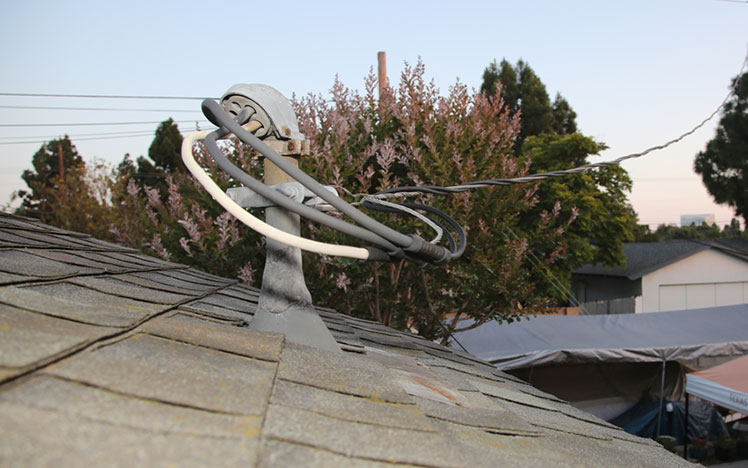
A weatherhead is a waterproof cap that protects a service drop—the point where overhead
electric wires from a power pole enter a building, usually via a hollow metal pole called a
service mast. The weatherhead is shaped like a hood, with one side sloping down so that moisture
will flow off and away from the connection. The electric wires enter the mast through the
underside of this hood, typically through watertight rubberized gaskets.
|
|
Know the Risks
|
|
While weatherheads are designed to stand up to wind, rain and snow, they are vulnerable to
impact from solid objects like tools or ladders. Also, especially if the fittings are older,
there may be fine cracks in a gasket so that it will still keep out moisture from above or to
one side, but may let in water under pressure from below—as from a hose or sprayer. And, of
course, if you slip and fall against the service mast, pulling wires loose, you risk being
severely shocked or electrocuted.
|
|
Keep Your Distance
|
|
If you’re going to be working on or around a roof, locate the weatherhead and the power lines
that feed into it. Then plan your job so that you can keep all workers, tools, materials and
equipment at least 10 feet away. If that’s not possible—say, you’re
re-roofing the entire house or replacing the gutters in that area—contact Dominion Energy well in advance. We’ll de-energize the service wires
or make other arrangements
to help you work safely.
|
|
Would You Like to Know More? |
| Additional utility safety tips, case studies, instructional videos and
educational tools can all be found, at no charge to you, on Dominion Energy’s e-SMARTworkers
website. |
|